When Algorithms Meet Reality: What Schedulers Really Need
Every experienced scheduler knows that a good rota is never just numbers on a page. It’s a story of personalities, strengths, and compromises. There’s the employee who works better with one colleague than another, the shift that drains even the best team, and the unspoken rule that only certain people can handle Friday nights without chaos.
You won’t find those insights written in any company policy, yet they make all the difference.
The Limits of Logic
Modern scheduling systems are built on logic, and logic is essential. It ensures compliance, balances workloads and prevents overwork. But the best schedulers operate on more than logic; they use instinct. They know who thrives under pressure, who needs mentoring and when a small exception keeps the whole team motivated.
Many digital tools overlook this nuance. They generate rotas that are technically correct but operationally fragile: perfect on paper, unworkable in practice. That’s because no algorithm, however advanced, can perform well without understanding the human context behind the data.
Capturing Human Insight
The most effective scheduling technology doesn’t try to replace the scheduler’s judgment. Instead, it learns from it. By allowing managers to encode both hard and soft rules, from legal requirements to subtle team dynamics, the system mirrors human reasoning rather than flattening it.
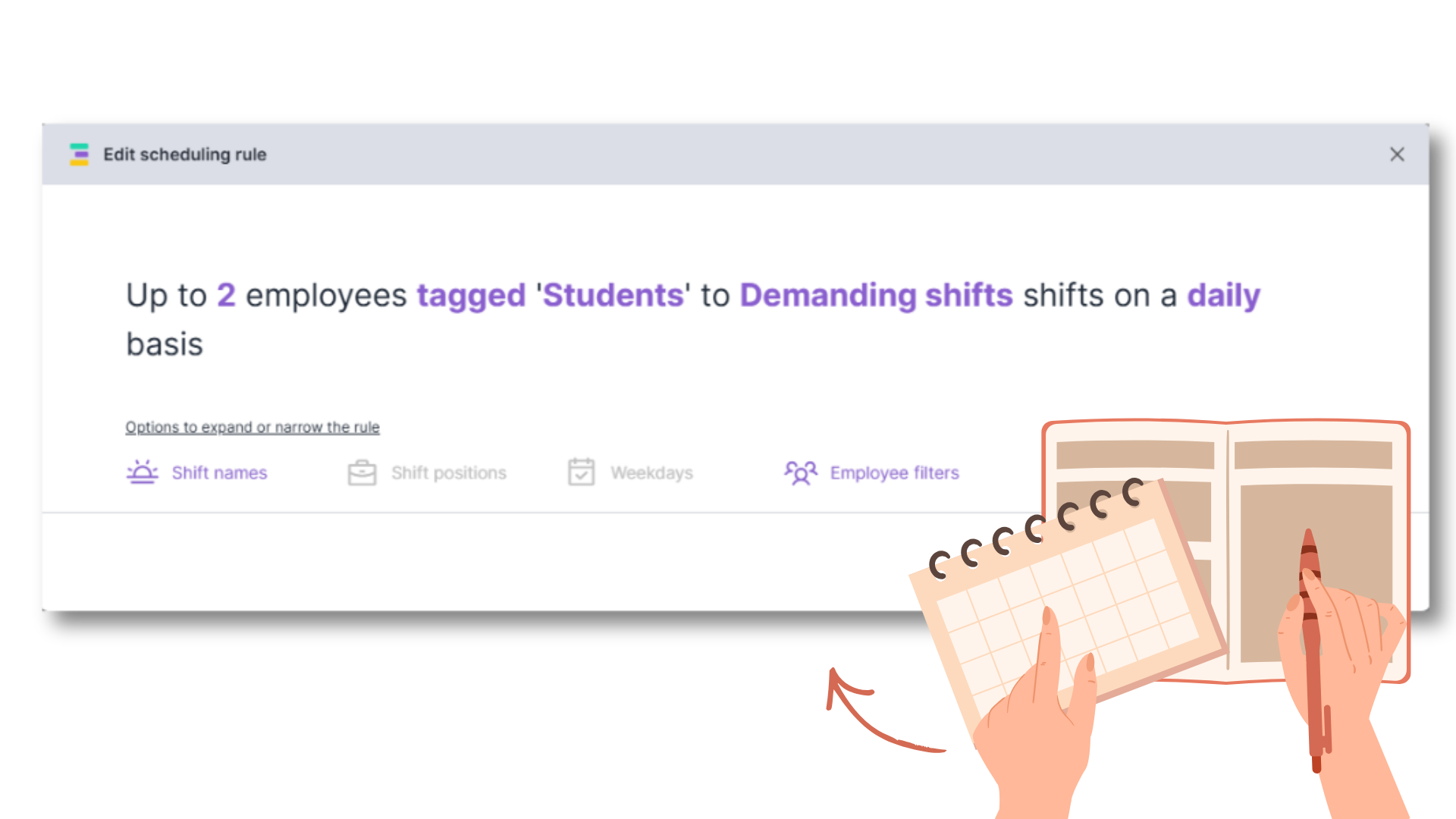
For example, a manager can define that two employees should not work together, that certain shifts require a minimum number of senior staff, or that a trainee should never be scheduled alone. These are not arbitrary preferences; they’re operational truths, learned over years of experience. When such insights become part of the scheduling logic, the outcome is not just compliant, it’s genuinely workable.
The Partnership Between Human and Machine
Automation performs best when it handles the heavy calculations while leaving space for human judgment. The system can process thousands of combinations in seconds, but the manager still decides what “good” looks like. That partnership transforms scheduling from an exhausting manual task into a guided, intelligent process.
Schedulers often describe this as a shift in mindset: instead of“fixing” what the system built, they now “teach” the system how to think. Once the rules are set, they rarely need to intervene again.

Lessons from the Floor
In one retail operation, a long-serving scheduler was asked to hand over her process to a new digital platform. She hesitated. After all, her success came from personal insight, not software. But within days, she discovered that the system could reflect her knowledge with precision. The result was a schedule that followed every rule she cared about: legal, practical, and personal, without the nightly adjustments she once made by hand. Her comment afterward summed it up perfectly: “It finally feels like the system understands me.”
Where Experience Meets Efficiency
Scheduling is as much art as it is science. Data, algorithms and automation are indispensable, but they reach their full potential only when combined with the wisdom of the people who know the work best. When technology learns from experience instead of ignoring it, the results are more than efficient, they’re human.
And that’s what every great rota really needs.