Smart but Simple: When Power Meets Usability
In workforce management, power and simplicity rarely coexist. The tools that promise deep automation often intimidate users, while the ones that feel easy to use fall short when it comes to handling complex realities. Yet effective scheduling demands both: sophisticated intelligence behind the scenes, and effortless usability at the surface.
The Hidden Cost of Complexity
Many organisations invest in advanced workforce systems only to find that adoption stalls after a few weeks. Managers struggle with endless configuration screens, employees avoid logging in, and the old spread sheets quietly return. The system may be powerful, but if people don’t enjoy using it, the benefits remain theoretical.
Technology succeeds when it feels natural, when the person operatingit doesn’t have to think about the process, only about the outcome. For scheduling, that means creating a system that can interpret dozens of rules, preferences, and policies, yet still let the user perform the task with confidence and clarity.
What Simplicity Really Means
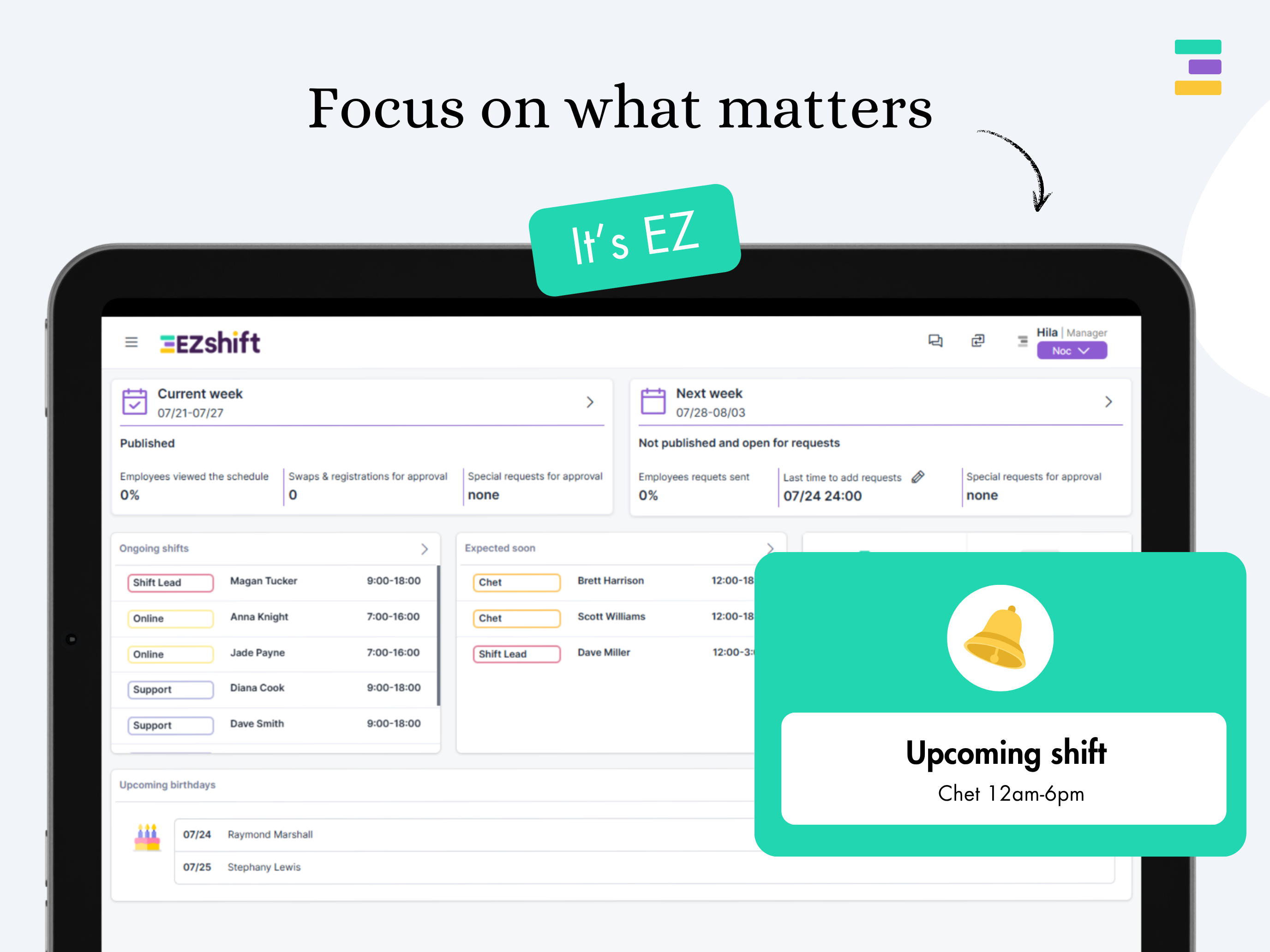
Simplicity is often mistaken for lack of depth. In reality, it’s about design that hides complexity without reducing capability. The interface should speak the same language as the user: shifts, roles, rest days, availability. It should allow a manager to generate a complete rota in seconds but still dive deeper when needed to adjust, review, or make exceptions. This is where true usability emerges: not in removing options, but in presenting them only when relevant.
The Role of Smart Automation
Behind every smooth experience must stand a capable engine. The system should understand labour laws, internal rules, and employee preferences automatically. It should know when a change violates a regulation and when it’s simply a matter of preference. It should calculate fairness, balance workloads, and enforce compliance without asking the manager to do the math. A platform that pairs this intelligence with an intuitive interface doesn’t just simplify scheduling it changes how people work with technology altogether. Managers stop fearing the system and start relying on it. Employees begin to trust it because it reflects reality rather than resisting it.

From Resistance to Adoption
The greatest barrier to digital transformation in scheduling is not technology; it’s human habit. Veteran schedulers often carry decades of practical knowledge shortcuts, exceptions, and sensitivities that no softwareseems to capture. When they meet a system that understands those nuances, the resistance disappears. This has been the experience of several organisations adopting modern scheduling platforms: long-time schedulers who once resisted automation now describe the process as enjoyable. The right system doesn’t replace their judgment, it amplifies it.
Finding the Balance
Smart and simple are not opposites; they are partners. A system that hides its sophistication behind a clear, approachable interface achieves what technology is meant to do: make complex work easier, faster, and more human. That balance - power in the background, simplicity in the foreground, is what defines the new generation of workforce scheduling.
It’s what turns automation from an abstract concept into an everyday advantage.