From Hospitality to Healthcare: One Engine, Infinite Workforces
Every industry has its own rhythm.
Restaurants face unpredictable rush hours, hospitals never close, factories operate around the clock, and security companies balance multiple sites with shifting demand. Yet, behind all these environments lies a shared challenge: ensuring the right people are in the right place at the right time, every time.
Despite the differences, the problem - and the solution - arere markably similar.
Different Worlds, Same Scheduling Problem
A hotel manager juggles peak seasons, last-minute bookings, and staff turnover. A hospital administrator manages legal rest requirements, skill certifications, and life-or-death staffing ratios. A retailer deals with weekend surges and student workers with limited availability.
The context may change, but the scheduling struggle remains: balancing fairness, compliance, and coverage under constant pressure. Traditionally, each sector has used its own tools: one for manufacturing, another for call centres, yet another for healthcare. The resultis fragmentation: every organisation reinvents the wheel, customising spreadsheets or basic apps to fit its rules.
But as workforce technology evolves, a new model is emerging: one intelligent system capable of adapting to any operational reality.
The Power of a Rule-Based Core
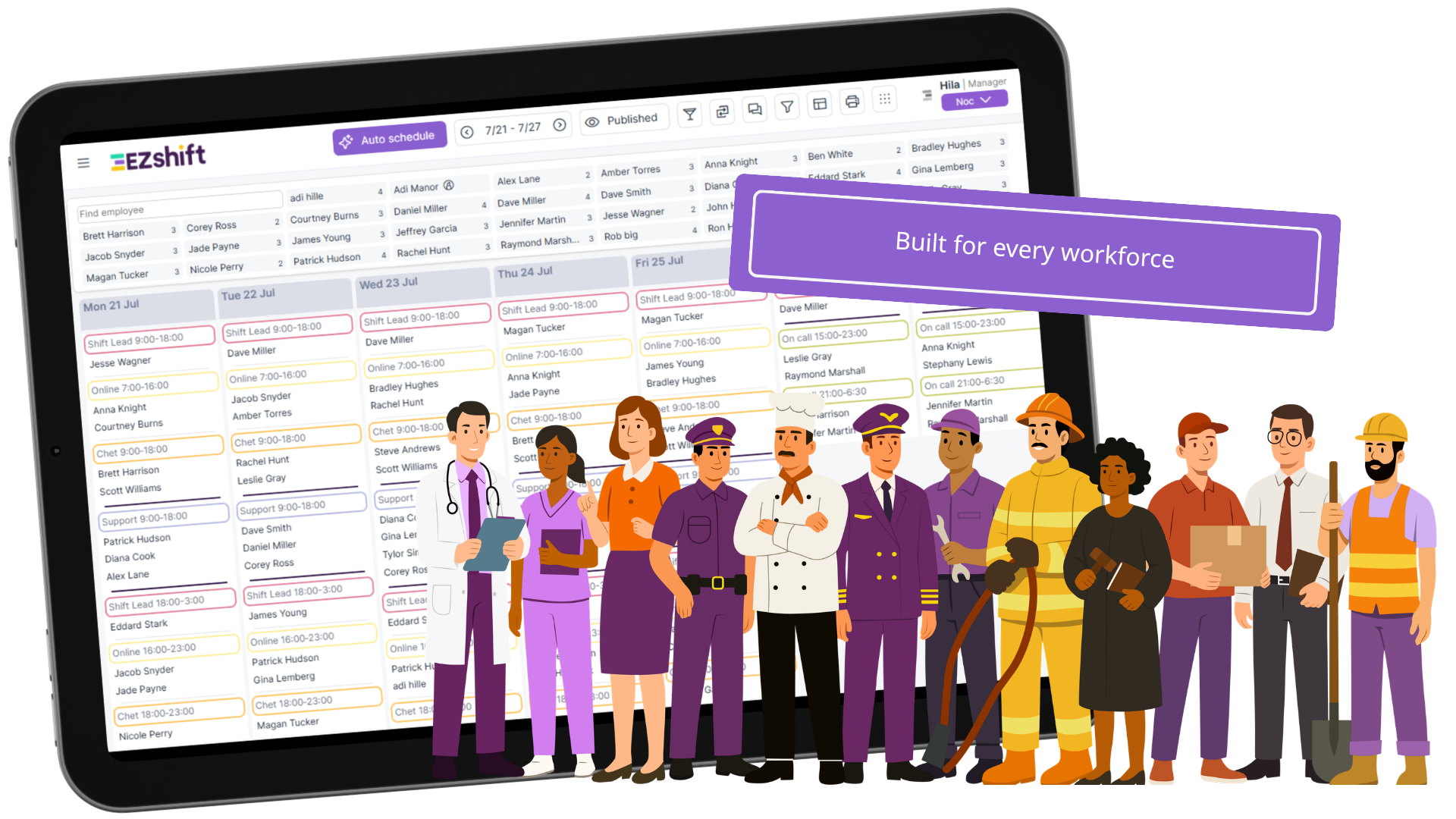
At the heart of this shift is a simple idea: define your rules and let the system interpret them.
A restaurant might prioritise equal weekend distribution; a hospital might enforce mandatory rest between on-call shifts; a retailer might limit nighthours for younger employees.
All of these are just variations of the same logic: conditional rules applied to people and time. A strong rule engine can encode them all, no matter the sector, and build rotas that meet every condition automatically. This approach replaces one-size-fits-all templates with true configurability. Instead of forcing each industry to adapt to the software, thes oftware adapts to the industry.
Lessons from the Field
In practice, organisations using advanced rule-based scheduling tools report similar benefits across sectors:
- Hospitals achieve compliance with complex labour laws and ensure balance on-call coverage.
- Hospitality chains maintain flexibility while improving fairness and reducing turnover.
- Retailers align staffing with real demand and cut unnecessary labour hours.
- Manufacturers manage rotating teams and avoid costly overtime.
- Security firms coordinate shifts across multiple locations without overlap.
The patterns repeat - proof that the core problem isn’t industry-specific, but structural.
Beyond Compliance
While legal compliance is a major driver, the deeper value lies in consistency and trust. Employees in every field want the same thing: fair treatment, predictable schedules, and respect for their time. When the rules that govern these expectations are built directly into the system, fairness becomes automatic, not discretionary. Managers, in turn, gain time to focus on leadership instead of logistics. Whether it’s a nurse, a bartender, or a warehouse supervisor, the result is the same: better coverage, less stress, and fewer errors.
The Universal Engine
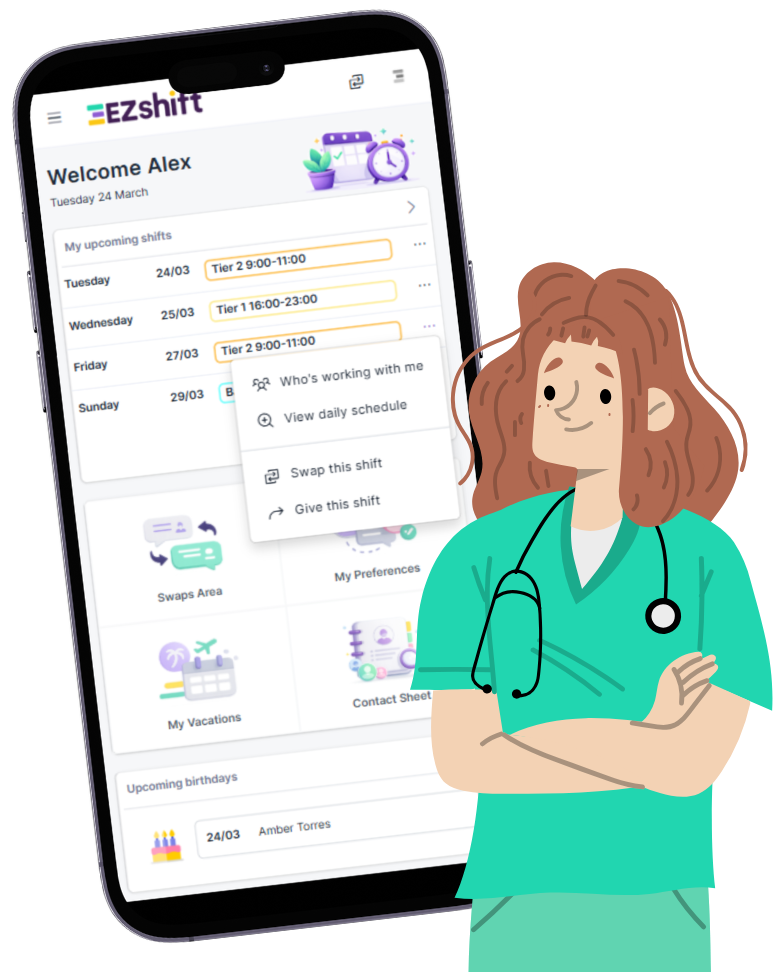
Modern scheduling platforms built around flexible rule logic, such as those now used by multi-sector enterprises, have proven that automation doesn’t have to be niche. The same intelligent framework can serve hospitality, retail, manufacturing, healthcare, aviation or security, each with its own policies and culture.
In the end, workforce management isn’t about where people work, it’s about how fairly and efficiently their time is used.
When that logic is built into a single adaptable engine, one solution can truly fit them all.