From Rota-Buildingto Rota-Running: Why True Automation Matters
In many organisations, “automation” has become a buzz word attached to every new piece of technology. Scheduling software is no exception. Most platforms promise automatic rotas, yet beneath the polished interface, managers still spend hours dragging, adjusting, and validating shifts manually.
The workload may have moved from paper to pixels, but it hasn’t really gone away.
The Problem with Partial Automation
Digitising a rota helps, but it doesn’t solve the underlying complexity of workforce planning. Behind every weekly schedule lies a web of variables: labour laws, internal policies, employee preferences, skill levels, and fairness rules. If a system can’t account for all of them simultaneously, managers are left filling the gaps fixing conflicts, redistributing hours, and checking compliance by hand.
The result? Time lost, errors introduced, and frustrated teams who feel the process is neither transparent nor fair. In sectors like hospitality, healthcare, and retail, where labour volatility is high and margins are tight, this inefficiency translates directly into cost.
What Real Automation Looks Like
True scheduling automation means the engine does the work, not the user. It should analyse every rule and condition - legal, organisational, and personal - and deliver a fully compliant, balanced rota at the click of a button. It should understand nuances such as maximum weekly hours, mandatory rest periods, skill combinations, and fairness rotations, all without relying on post-generation fixes. When automation is done right, the manager’s role shifts from constructing the rota to overseeing it.
That’s not a loss of control it’s a reallocation of focus, from mechanicsto management.

The Human Factor Still Matters
Automation doesn’t remove the human element; it enhances it. By freeing managers from repetitive admin work, it gives them time to lead, to coach staff, handle customers, and planahead. For employees, consistent and fair scheduling improves trust and reducesburnout. When the process feels impartial, engagement grows.
A Practical Example
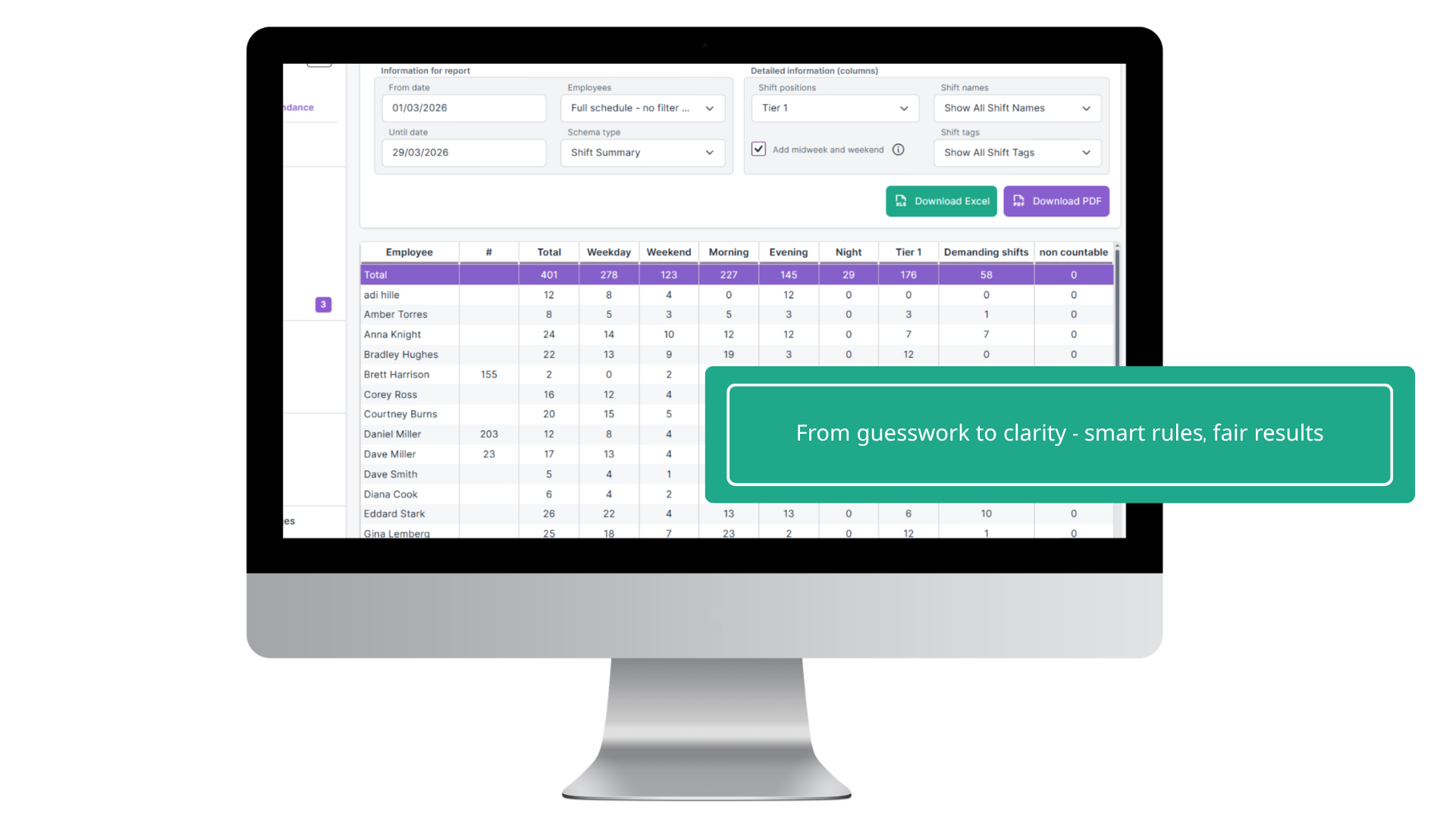
Several organisations have adopted systems capable of producing fully compliant schedules in seconds not hours. One such platform was designed around a rule-based engine that replicates how experienced schedulers think, rather than forcing them to adapt to rigid templates. Managers set their operational, legal, and fairness parameters once, and the system handles the rest. Updates take minutes, not afternoons.The measurable impact is immediate: fewer scheduling errors, stronger compliance, and teams that feel treated consistently.
Looking Ahead
The next evolution in workforce management isn’t about adding more dashboards; it’s about removing friction. True automation transforms scheduling from a tedious, reactive process into a strategic one - a foundation for better service, lower costs, and happier staff.
When technology genuinely understands the business logic behind every shift, the rota stops being something you build and startsbeing something that simply runs.