Command the Chaos: How Managers Win Back Their Time
Few tasks consume as much managerial energy as building a rota. The process starts as planning and ends as firefighting; shifts change, employees swap, rules collide, and the weekend disappears in a blur of adjustments. The real frustration isn’t the work itself, but the constant sense of being one step behind.
The good news is that the chaos isn’t inevitable. It’s a symptom of a system that still depends too much on manual control.
The Hidden Cost of Micromanagement
Many managers believe that staying hands-on is the only way to ensure accuracy and fairness. They spend hours crafting schedules, checking compliance, and rebalancing shifts, only to repeat the process days later. This cycle drains time and attention from what really matters: leading people, improving service, and growing the business. Micromanagement doesn’t prevent mistakes - it just delays them. The more decisions a human has to make manually, the greater the chance of oversight.
What starts as vigilance quickly becomes fatigue.
Turning Chaos into Control
The alternative isn’t less control, it’s better control. A rule-based scheduling system transforms the process from reactive to proactive. Instead of manually adjusting every detail, managers set the conditions that define a good schedule: legal limits, staffing levels, fairness policies, and skill requirements. Once those parameters are in place, the system handles the combinations automatically, generating a fully compliant rota in seconds. Managers then focus on review and approval, not reconstruction. The difference is immediate. Hours once lost to spreadsheets are reclaimed for supervision, training, and problem-solving, the parts of management that actually build value.
Seeing the Whole Picture
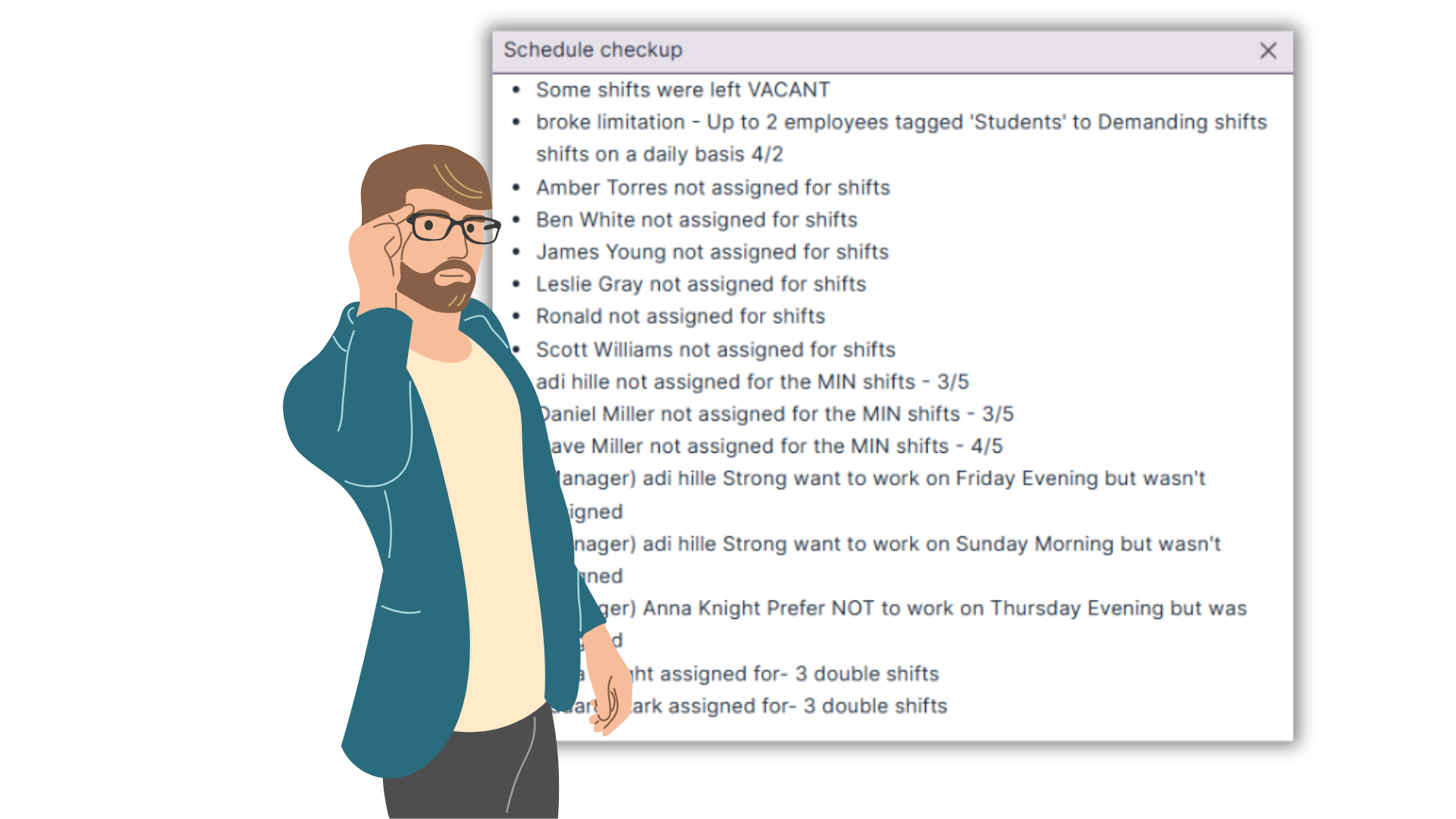
Automation also delivers clarity. Real-time visibility shows who is available, who’s reached their hour limits, and where gaps might appear. When a change occurs, the system recalculates instantly, flagging any risks before they become problems.This transparency gives managers confidence to act quickly and consistently. There’s no more guessing who can cover a shift or whether a rule has been broken, the answers are already visible.
Empowering People, Not Replacing Them
Some fear that automation takes decision-making away from managers. In reality, it does the opposite.
It removes the repetitive work that clutters decision-making, allowing leaders to focus on higher-level judgment. A system that understands the organisation’s rules doesn’t replace leadership - it supports it.
The manager remains in control but finally has the space to think strategically rather than administratively.
From Firefighting to Leadership
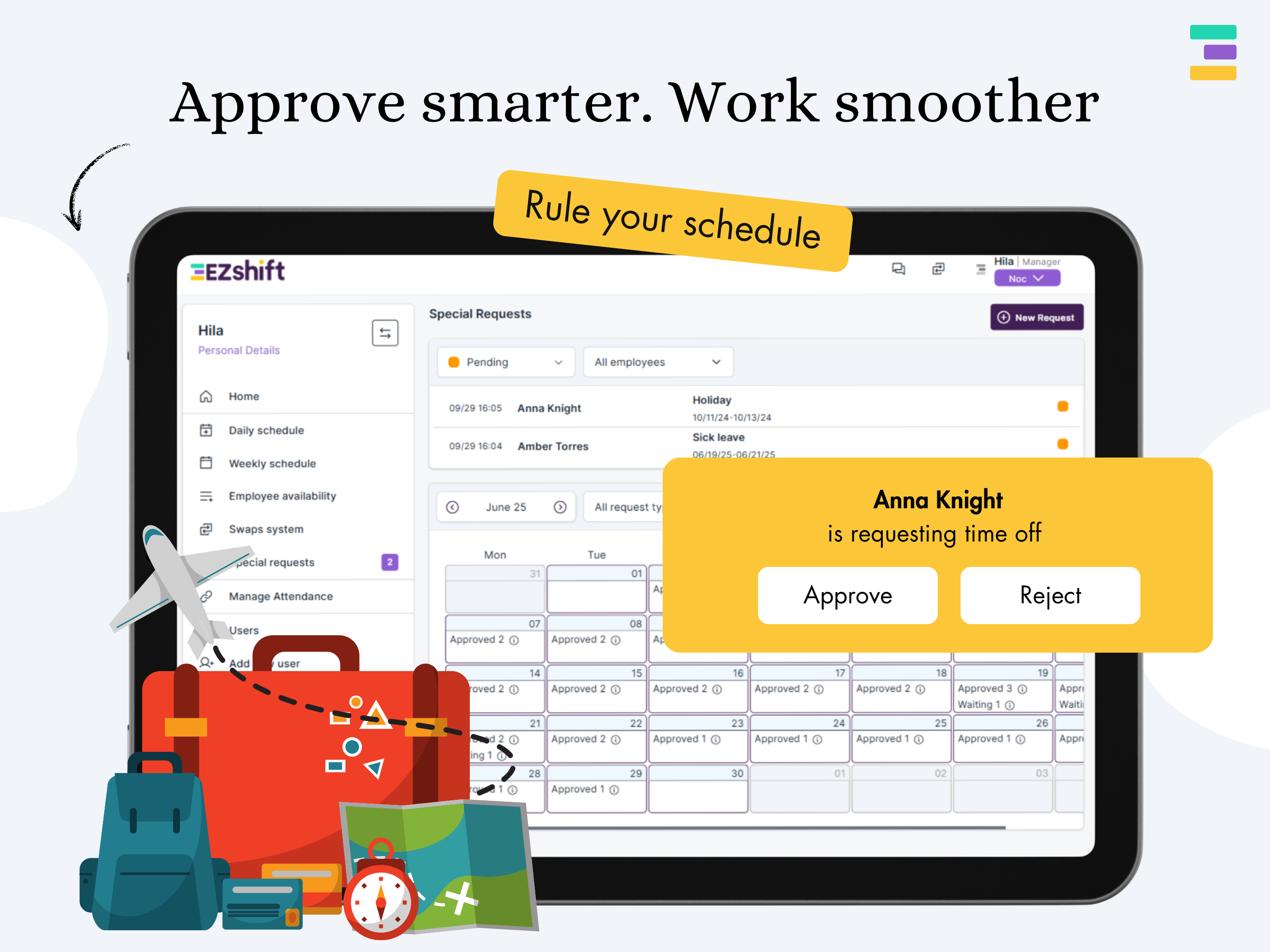
When the scheduling process runs smoothly, managers can shift their attention to what matters most: engaging teams, improving performance, and delivering results. Operations become calmer, communication improves, and bothmanagers and employees feel the difference. This transformation isn’t just about saving time. It’s aboutre gaining authority in a process that too often feels chaotic. With the right structure in place, control becomes effortless,not exhausting.
Because in the end, real leadership isn’t about reacting to every problem. It’s about building systems that prevent them.